
St. Louis County's Most Wanted Program
The sheriff's office maintains a Most Wanted page, though it works differently than most people expect. No local roster of names, faces, or reward amounts appears there. Instead, the page gathers links to federal fugitive programs, and it notes that those sites sit outside county control. That design is deliberate. A county sheriff's office does not run a nationwide manhunt; its deputies serve local court orders, and the warrant division keeps St. Louis County's own lists.
A Program Directory, Not a St. Louis County Roster
A most wanted page is not always a wall of local faces, and St. Louis County's is not. The official page carries no county-specific roster, no posted reward schedule, and no stated refresh cadence for local names. What it does carry is a short set of federal destinations, from the FBI's ten most wanted fugitives to the U.S. Marshals Service's fifteen most wanted. Each link leaves the St. Louis County site. A search here therefore has two possible outcomes: a match on a federal program, or no match at all. A miss says nothing about a county court file.
- Most wanted list
- A small set of fugitives an agency asks the public to help locate.
- Program directory
- A page that links other agencies' lists instead of publishing its own.
- Fugitive
- A person who has not answered a criminal charge or a court order.
How the Most Wanted Lists Work
A most wanted list is a request for public help. An agency picks a few cases, publishes what it chooses to release, and asks readers to send information to investigators rather than act themselves. Those lists update on the publishing agency's schedule, not the county's. Nothing about St. Louis County's nightly files changes a federal page. Local warrant information moves on its own clock, since the sheriff's two files refresh around nine each evening. Only a court can settle the underlying case.
Federal Programs Behind the St. Louis County Links
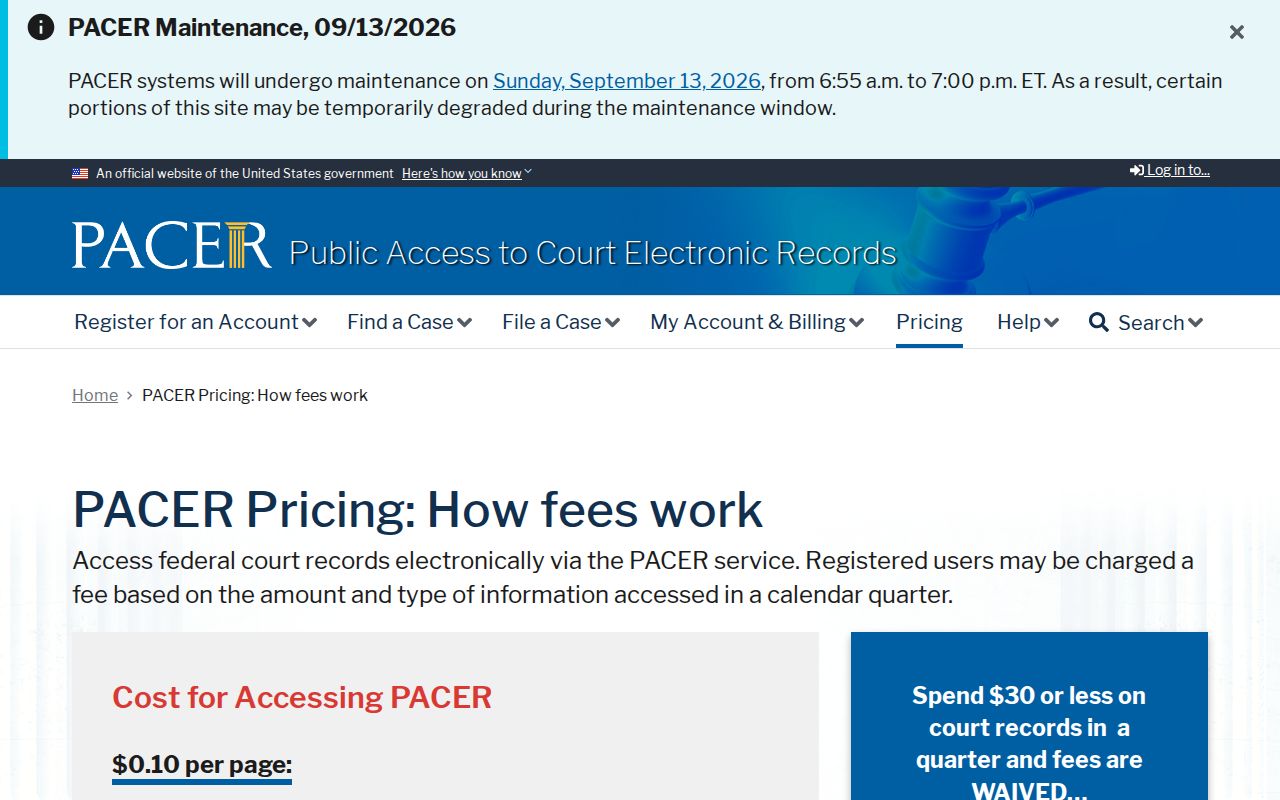
Federal warrants run on their own track. The federal courthouse in Duluth handles this region's federal cases, and document access follows the judiciary's rules, which PACER pricing rules explain.
A federal fugitive profile usually traces back to a federal charge, an indictment, or a federal warrant. A state court counter cannot answer questions about any of those. The U.S. Marshals Service runs the district's fugitive task force. The St. Louis County page points to five programs, including the FBI's ten most wanted fugitives and the U.S. Marshals Service's fifteen most wanted.
Reporting a Tip Safely
A tip is information about where a person is. St. Louis County keeps an anonymous Warrant Tips form for exactly that purpose. It is not a way to ask about your own record, and it cannot recall a warrant. The warrant division repeats one instruction without hedging: do not approach or try to detain anyone who appears on a list. Deputies and police officers make arrests.
Key Point: Send what you know to investigators and let them act on it. The warrant division tells readers not to apprehend anyone listed, and the tip form is not a status check.
Inside the St. Louis County Warrant Tips Form
Each field on the form has a purpose. St. Louis County asks for the person's name and any aliases. It wants locations with the best time to look, plus detail such as a vehicle, a plate, or a phone number.
| Suspect name and aliases | Who the tip is about, including other names that person uses. |
|---|---|
| Location and best time | Where the person may be and when they are likely to be there. |
| Supporting details | Vehicle, license plate, phone number, or other identifying information. |
| Your contact information | Optional. Leave it blank to keep the submission anonymous. |
Contact information is optional, which is what makes the submission anonymous. The form will not tell you whether a warrant exists, even in St. Louis County.
Most Wanted Lists vs Active Warrants
The two terms get mixed up constantly. A most wanted list is a curated selection an agency wants help with. An active warrant list is the fuller record of open court orders inside one jurisdiction, such as St. Louis County.
| Point of Comparison | Most Wanted List | Active Warrant List |
|---|---|---|
| Who publishes it | The FBI, U.S. Marshals, or another agency | The St. Louis County Sheriff's Office |
| How many people | A small, hand-picked set | Every entry the county generates |
| What it signals | The agency wants public help finding someone | A court order is open and unserved |
| Where to confirm | The publishing agency or the federal court | Court Administration in Duluth, Hibbing, or Virginia |
For a local case, the county list is the better start. The outstanding warrants page explains how those St. Louis County files are built. A federal program link is the better start only for a federal case.
From the 2016 Daily List to Nightly PDFs
St. Louis County's first public warrant list arrived in 2016. The launch notice described a daily update, plus felony and gross misdemeanor warrants created after December 5, 2011.
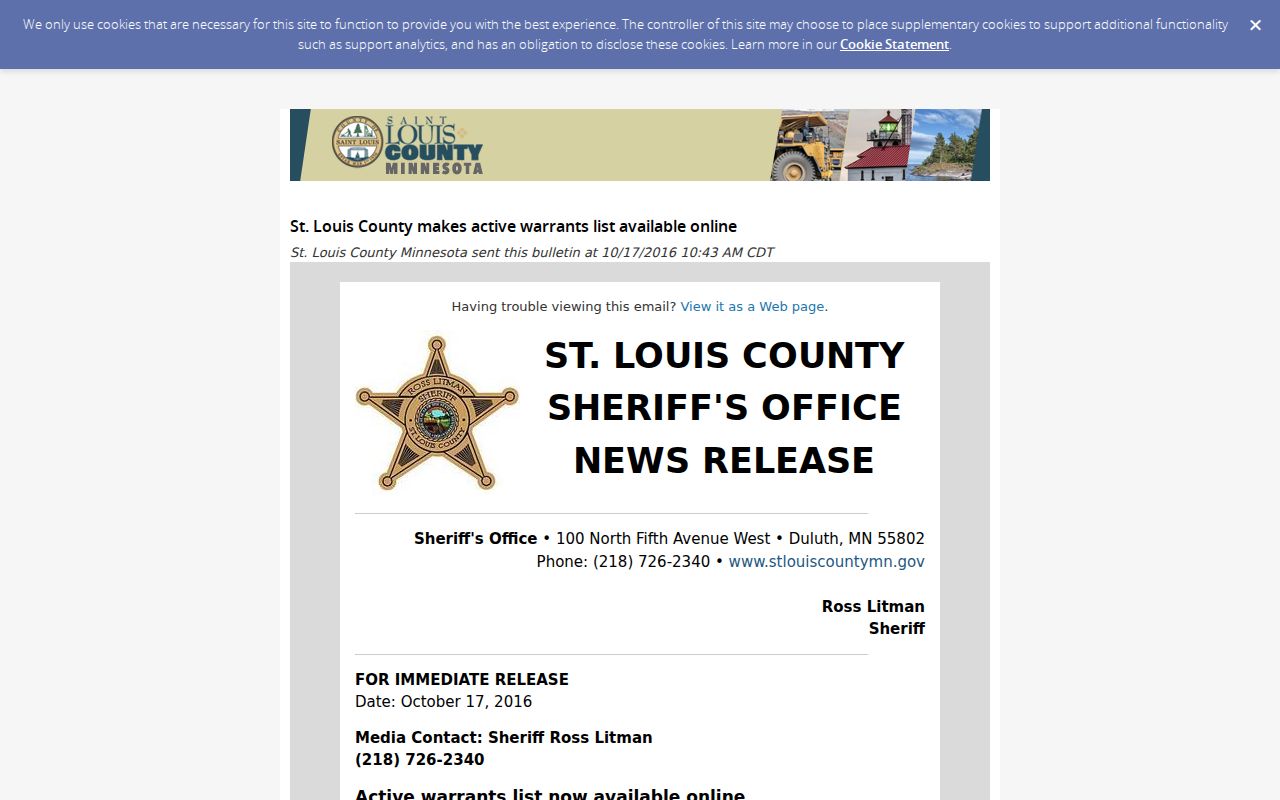
Those exclusions covered juvenile, confidential, and team-secured matters, plus roughly five thousand misdemeanor warrants. They were a 2016 statement of scope, not today's rules, because the current warrant division page does not repeat them. What carried forward is generated files rather than a searchable database. St. Louis County readers still open two PDFs and use their viewer's find function.
If You Think You Are on a List
Finding your own name on a list is frightening. The first useful step is not a call to the agency that published it. A federal program cannot change a state court case in St. Louis County, and a county list cannot change a federal one.
Act through the court: Do not wait for an arrest to sort this out. Call the Court Administration office that holds the case, consider a lawyer, and ask about a voluntary appearance before an officer decides for you.
- Note which list you saw and which agency publishes it.
- If it is a county file, call Court Administration in Duluth, Hibbing, or Virginia.
- If it is a federal program, contact the federal court or the U.S. Marshals Service.
- Talk with a lawyer before you appear, and ask about a public defender if cost is a barrier.
Why the Public-Offender Page Says Not a Full List
The sheriff's public-offender records page calls its own set of links not a full list, and St. Louis County readers should take that phrase at face value. The page pulls together state criminal history, court records, corrections data, and victim notification. It is a starting point, nothing more. Three gaps explain why. Juvenile and confidential records stay sealed. Court rule limits remote access to some case files. And a record set built once a night can trail what happened in a St. Louis County courtroom by a full day, so a blank result proves nothing. Note: When a record question matters, confirm it with the court that holds the case rather than the list where you found it.